
Pre-Winter Essential Home Maintenance Checklist
A Manhattan Homeowner's Guide to Seasonal Property Inspections
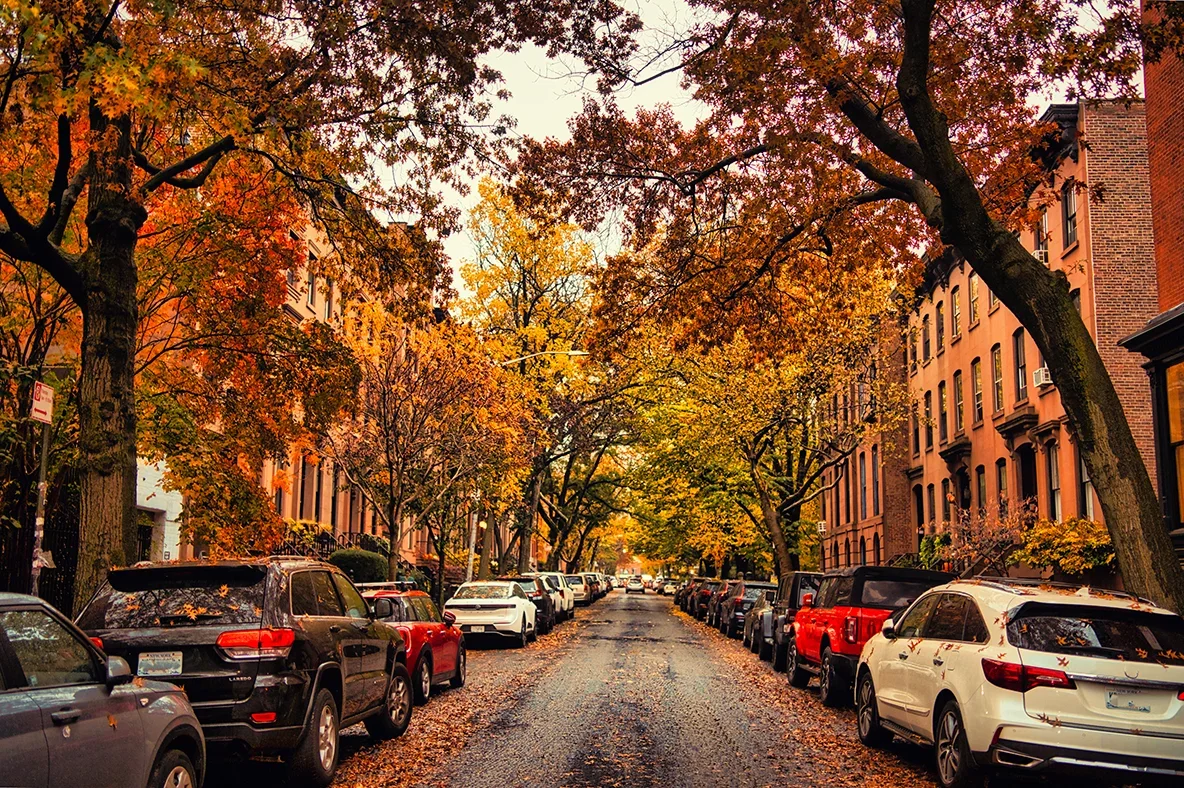
Seemingly overnight we went from summer to fall. Just as quickly, we’ll go from planting mums to putting out poinsettias. You might have noticed a lot of Top Hat Home Services trucks around the city. We’ve got a brief window between the last warm week of October and the first hard frost of November, when Manhattan's brownstones, townhouses, and prewar lofts need to get checked before the temperatures plunge. The biggest mistake we see homeowners make is that they think they have more time to get their home ready for winter. The unpredictable October weather can make it easier to postpone winter prep. But this is the time of year when our team is on site, focusing on three main things that determine how clients’ homes perform over the next four months:
1. The façade
2. The masonry
3. The windows.
Our clients get monthly roof to foundation inspections, along with proactive maintenance and repairs. This time of year, that includes servicing HVAC systems and clearing gutters. Those are important, but these three things are worth calling out since they can lead to the most expensive surprises. The stone, brick, mortar, and glazing that separate a Manhattan interior from a New York winter need to be seen by a trained eye at exactly this time of year.After twenty-one years managing brownstones, townhouses, individual co-ops and investment properties all over Manhattan, we’ve got one important piece of advice to help choose the right property manager: Choose one based on how you use your property.
Why Pre-Winter Facade Inspections Matter for Manhattan Brownstones
Manhattan's brownstone and townhouse facades typically feature the original (old) material, dating to the late nineteenth century, built with masonry and mortar techniques that were never designed to withstand a century of freeze-thaw cycles, let alone the deicing salt and temperature swings of a 2026 Manhattan winter. Even masonry in excellent condition is porous by nature. It absorbs moisture during the fall rains, and when that moisture freezes and expands inside brick, stone, or mortar joints, it does so with enough force to widen hairline cracks that were invisible just weeks earlier.
This is the mechanism behind nearly every major facade repair a Manhattan property owner eventually faces: not a single dramatic failure, but one freeze-thaw cycle after another, each one slightly worse than the last, until spalling brick or crumbling mortar becomes impossible to ignore. It also becomes considerably more expensive to fix than it would have been in October. A pre-winter facade inspection exists to interrupt that cycle before the first freeze, not after the damage is already underway.
What a Pre-Winter Masonry Check Actually Reveals
Masonry maintenance in Manhattan is often misunderstood as a cosmetic concern, affecting curb appeal more than function. In a building where the exterior wall is structural, nothing could be further from the truth. Mortar joints that have begun to erode allow water intrusion directly into the walls, where it can migrate toward interior finishes, insulation, and even structural framing long before any sign appears on an interior wall.
A trained eye, inspecting a facade before winter, is looking for exactly this kind of early warning: deteriorating pointing, hairline fractures near window lintels, efflorescence (the chalky white residue that signals moisture has already been moving through masonry), and any area where a building's natural settling has opened a gap that didn't exist the year before.
How Much Money Am I Losing Because of Old Windows?
If facades and masonry are the building's armor, windows are its most consistent point of vulnerability. The U.S. Department of Energy shared that reducing drafts and air leakage around windows and doors can meaningfully lower a home's annual energy costs, and in a prewar Manhattan building with original or aging windows, that leakage is rarely limited to one or two obvious spots. Seals degrade unevenly. Glazing putty dries and cracks. Weatherstripping compresses over years of use until it no longer does the job it was installed to do.
The result isn't usually a single draft dramatic enough to notice while standing in a room. It's a slow, cumulative loss of efficiency that shows up instead as a heating system working harder than it should, room-to-room temperature inconsistency, and, in the more serious cases, condensation and moisture intrusion around frames that can damage both the window and the surrounding masonry or trim. A pre-winter window assessment catches this before the heating season, rather than mid-January, when the inefficiency is already costing money and the repair options are more limited.
How Facade, Masonry, and Window Checks Work Together
None of these three elements fail in isolation. A compromised window seal allows moisture to reach the masonry immediately surrounding it. Deteriorating mortar near a window lintel accelerates wear on the window frame itself. A facade crack left unaddressed through one winter becomes the starting point for a larger repair the following year, often one that involves the windows nearest to it as well. This is why an experienced Manhattan property manager like Top Hat never treats these as three separate maintenance items. They're assessed together, because they fail together, and because the cost of letting one small issue compound across a full winter is almost always higher than the cost of catching it now.
This is also why the timing matters as much as the inspection itself. Caulking, sealant work, and minor masonry repair all depend on temperatures that are no longer guaranteed once we get to the holidays. A pre-winter inspection isn't just thorough; it's timed to a narrowing window in which certain repairs are still possible at all before spring.
What Over Twenty Years of Pre-Winter Inspections Has Taught Us
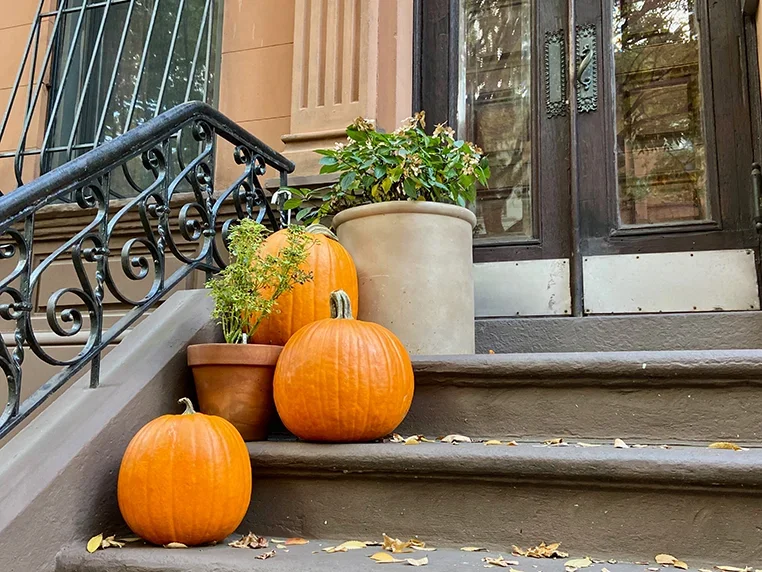
At Top Hat Home Services, pre-winter facade, masonry, and window inspections are standard operating procedure for how we care for Manhattan's brownstones, townhouses, lofts, and co-ops. We have decades of experience watching exactly how this city's homes behave under cold-weather stress, block by block and building type by building type. Our seasonal approach extends well beyond the envelope alone. It covers the heating system, the gutters and drainage, the detectors that protect a home through its highest-risk season for fire and carbon monoxide exposure, and the dozens of smaller mechanical details, such as refrigerator coils, dishwasher lines, faucet aerators, that quietly determine how a home runs all winter long. Homeowners who want the full scope of what a properly prepared Manhattan home looks like heading into the cold season can see what's included for Annual Advantage Program members, or explore the broader range of homeowner services we provide throughout the year.
The Real Cost of Skipping the Pre-Winter Check
The owners who skip a pre-winter inspection rarely notice the omission in the fall. They notice it in February, when a hairline crack has become a visible one, when a drafty window has become a heating bill that doesn't make sense, or when water that found its way in during a November storm finally shows itself as a stain on an interior wall. By then, the repair is no longer a matter of a few hours of attention. It's a project, one that often has to wait for spring regardless, because by February, Manhattan is no longer a season for exterior masonry work at all.
We’ve seen homes in every state. Our goal is to take the stress out of homeownership and keep homes in like-new condition, so you and your family can hunker down and enjoy cozy winter days.
Gary Mindlin is co-founder and owner of Top Hat Home Services, a full-service property care and management company. Top Hat services homes in Manhattan and are known as experts in every aspect of building management, maintenance and repair, as well as renovation and construction supervision.